
Twin Cities Home Solutions LLC
Gutter Installation and Repair Services in Maplewood, MN
Gutters are one of the most functional and most overlooked components of a home's exterior system. When they work correctly, they are invisible — quietly channeling thousands of gallons of water away from your foundation, siding, and landscaping every year. When they fail, the consequences are anything but invisible. Foundation erosion, basement water intrusion, rotted fascia, damaged siding, and compromised landscaping are all direct results of gutters that are undersized, improperly pitched, poorly installed, or left in a state of disrepair. Twin Cities Home Solutions LLC provides complete gutter installation and repair services in Maplewood, MN.
Ready to upgrade or repair your gutters in Maplewood, MN?
Call Twin Cities Home Solutions LLC today for a free gutter estimate.

Gutter Systems Installed in Maplewood, MN
Selecting the right gutter system for a Minnesota property means accounting for roof size, pitch, average rainfall intensity, freeze-thaw cycling, and the specific drainage challenges of each structure. Twin Cities Home Solutions LLC installs seamless and sectional gutter systems in a range of materials, profiles, and sizes, matching each installation to the performance requirements of the property it serves.
Seamless Gutter Materials
Seamless Aluminum Gutters
Seamless aluminum gutters are the most widely installed gutter system on residential properties across the Twin Cities metro. Fabricated on-site from a continuous coil of aluminum stock, seamless gutters eliminate the lap joints found in sectional systems — the points where leaks most commonly develop over time. Aluminum is lightweight, corrosion-resistant, and available in a wide range of factory-applied colors. Standard residential aluminum gutters are available in five-inch and six-inch K-style profiles, with six-inch systems recommended for larger roof surfaces or steeply pitched roofs.
Seamless Steel Gutters
Steel gutters offer greater structural rigidity than aluminum and are a strong choice for properties in areas with heavy snow and ice loads, or where physical impact from ladders and landscaping equipment is a recurring concern. Steel gutters hold their shape under the weight of ice and debris accumulation better than lighter aluminum alternatives and are available in galvanized, Galvalume, and painted profiles.
Copper Gutters
Copper gutters are a premium option for historically significant homes, high-end custom construction, and properties where the distinctive appearance of natural copper patina is a design priority. Copper gutters are exceptionally durable, fully recyclable, and develop a characteristic green patina over time. They are significantly more expensive than aluminum or steel but require no painting and carry an exceptionally long service life when properly installed.
Gutter Profiles and Sizing
K-Style Gutters
K-style gutters — named for the profile shape of their front face — are the standard residential gutter profile across most of the United States, including Minnesota. Their flat back and ogee-curved front allow them to carry more water volume per inch of width than half-round profiles of the same nominal size, making them well-suited to the precipitation intensity of Twin Cities storm events.
Half-Round Gutters
Half-round gutters present a rounded trough profile that is historically associated with older and more architecturally traditional homes. They are commonly specified on craftsman, colonial, and historic revival style properties where a period-appropriate gutter profile is a design consideration. Half-round gutters are available in aluminum, steel, and copper.
Contact Twin Cities Home Solutions LLC to discuss the right gutter system for your Maplewood, MN property — sizing, profile, and material matched to your specific structure.
Professional Gutter Installation in Maplewood, MN
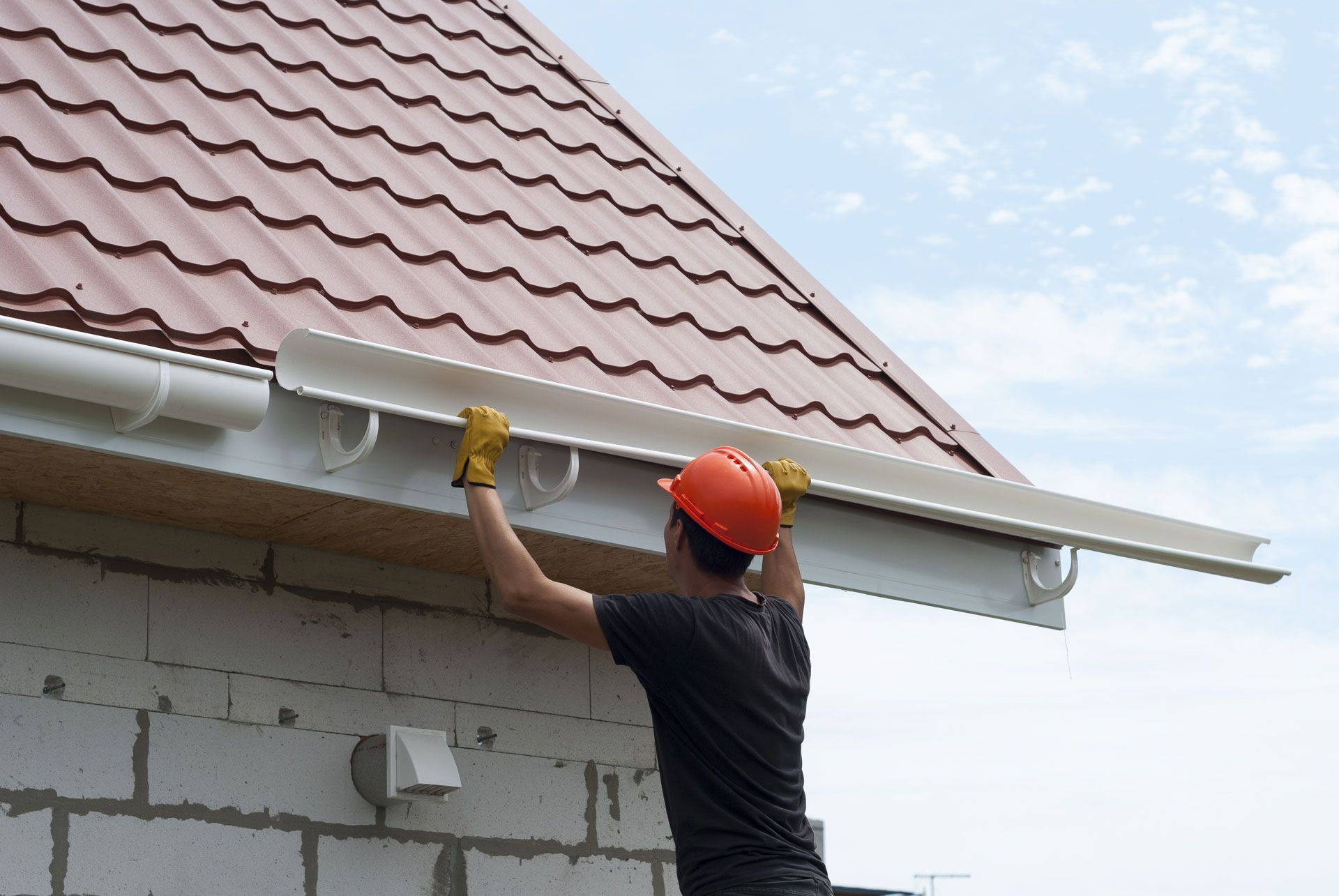
A gutter system that is properly sized but incorrectly installed will fail to perform as designed regardless of material quality. Pitch, hanger spacing, downspout placement, and integration with the roof edge and fascia are all installation details that directly determine whether a gutter system manages water effectively or allows it to overflow, back up, or pull away from the structure over time. Twin Cities Home Solutions LLC installs every gutter system in Maplewood with the precision that long-term performance requires.
Critical Gutter Installation Details
Pitch and Slope
Gutters must be installed with a consistent slope toward downspouts — typically one quarter inch of drop per ten feet of run — to prevent water from standing in the trough. Standing water in gutters promotes rust in steel systems, accelerates organic debris decomposition, creates mosquito breeding conditions, and adds weight that stresses hangers and fascia attachment points. Proper pitch is established during layout before any hanger is set.
Hanger Spacing and Fascia Attachment
Hidden hanger systems are the current standard for residential gutter installation and provide superior holding strength compared to older spike-and-ferrule methods. Hangers are spaced to support the gutter under the load of standing water and ice accumulation — in Minnesota, gutter systems must be able to handle significant ice weight during winter months without pulling away from the fascia or deforming. Fascia condition is assessed before installation, and any rotted or deteriorated fascia boards are replaced to ensure secure attachment.
Downspout Placement and Discharge
Downspout quantity and placement are determined by the drainage area each section of gutter serves and the location of foundation plantings, walkways, and grading conditions at the base of the structure. Downspout extensions and underground drainage connections are used where direct discharge at the foundation would create water management problems. Every downspout outlet is directed away from the foundation to protect the structure's basement and crawlspace from water infiltration.
Schedule your gutter installation with Twin Cities Home Solutions LLC in Maplewood, MN — proper sizing, pitch, and attachment from the first hanger to the last downspout.
Gutter Repair Services in Maplewood, MN
Gutter systems are exposed to constant stress from water weight, ice formation, debris accumulation, wind, and physical impact. Over time, even well-installed systems develop issues that compromise their function. Twin Cities Home Solutions LLC performs gutter repairs throughout Maplewood and the surrounding Twin Cities metro, restoring system function with targeted repairs that address the actual source of the problem rather than applying surface-level fixes that recur seasonally.
Common Gutter Repair Scenarios
Leaking Joints and End Caps
On sectional gutter systems, the sealed joints between sections and at end caps are the first points to fail as original sealant ages and loses adhesion. Resealing deteriorated joints with fresh professional-grade sealant restores the watertight integrity of the system when the surrounding gutter material is otherwise in sound condition.
Sagging and Pulling Away From Fascia
Gutters that sag between hangers or pull away from the fascia are no longer pitched correctly and will hold standing water or overflow at low points. This condition is caused by hanger failure, rotted fascia that can no longer hold fasteners, or excessive weight from ice and debris accumulation. Rehanging affected sections with new hidden hangers — and replacing rotted fascia where necessary — restores proper pitch and attachment.
Storm and Hail Damage Repair
Hail events dent and deform aluminum gutters, affecting their cross-sectional shape and drainage capacity. Heavy ice loads pull gutter sections away from fascia and deform hangers. Wind-driven debris impacts can crack or puncture gutter troughs. Storm-related gutter damage is frequently covered under homeowner's insurance policies and is documented by Twin Cities Home Solutions LLC as part of complete post-storm exterior assessments.
Dealing with leaking, sagging, or storm-damaged gutters in Maplewood, MN? Call Twin Cities Home Solutions LLC for professional gutter repair.
Gutter Guards and Leaf Protection Systems
Gutter maintenance is an ongoing responsibility that carries real physical risk for homeowners who attempt to clean gutters themselves from ladders. Gutter guard systems reduce the frequency of required cleaning by preventing leaves, pine needles, shingle granules, and other debris from accumulating in the trough. Twin Cities Home Solutions LLC installs gutter guard systems on new and existing gutters throughout Maplewood, matching the appropriate protection system to the specific debris types and gutter profiles present on each property.
Gutter Guard Options
Micro-Mesh Gutter Guards
Micro-mesh gutter guards use a fine stainless steel mesh surface over a solid frame to allow water to pass through while blocking virtually all debris — including small particles like pine needles and shingle granules that defeat coarser filter systems. Micro-mesh systems are widely regarded as the most effective debris exclusion option available and are particularly well-suited to properties surrounded by mature trees.
Solid Cover and Surface Tension Guards
Solid cover systems use surface tension to guide water around a curved nose and into the gutter while allowing debris to fall off the edge. These systems perform well in moderate debris environments but can be overwhelmed during heavy rainfall events when water volume exceeds the surface tension adhesion capacity of the system.
Ask Twin Cities Home Solutions LLC about gutter guard installation for your Maplewood, MN home — reduce maintenance and protect your gutter system year-round.
Frequently Asked Questions About Gutters in Maplewood, MN
How often should gutters be cleaned in Minnesota?
Most Minnesota homes require gutter cleaning at minimum twice per year — once in late spring after tree seed and pollen season and once in late fall after leaves have fully dropped. Homes surrounded by mature deciduous trees or pine trees may require additional cleanings during peak debris periods. Gutter guards reduce but do not entirely eliminate the need for periodic cleaning and inspection.
What size gutters do I need for my Minnesota home?
Most residential properties are adequately served by five-inch K-style gutters. Homes with steeply pitched roofs, large roof surface areas draining to a single gutter run, or locations subject to high-intensity rainfall events benefit from six-inch K-style systems that carry approximately 40 percent more water volume. Downspout sizing — three-by-four inch rectangular or four-inch round — should be matched to gutter size and drainage area.
How long do aluminum gutters last in Minnesota?
Properly installed seamless aluminum gutters typically last 20 to 30 years in Minnesota. Sectional systems with sealed joints tend to have shorter functional lifespans as joint sealants deteriorate. Steel gutters last 20 years or more. Copper gutters can last 50 years or longer with proper installation and maintenance.
What causes gutters to pull away from the house?
The most common causes are rotted fascia boards that can no longer hold fasteners securely, hanger failure from age or ice loading, and improper original installation with insufficient hanger density. In Minnesota, the weight of ice that forms in gutters during winter adds significant stress to hanger attachments, accelerating failure in systems that were marginally installed to begin with.
Do gutters cause ice dams in Minnesota?
Gutters themselves do not cause ice dams — ice dams are caused by heat escaping from the conditioned living space into the attic, melting roof snow that refreezes at the colder eave. However, ice does form in gutters as a consequence of this process, and the weight of gutter ice can pull gutter systems away from the fascia. Addressing the root cause — attic insulation and ventilation — is the proper solution.
Should I repair or replace my gutters?
When damage is isolated to a specific section or component — a leaking joint, a single sagging run, or a damaged downspout — repair is typically appropriate. When the system is aged, widespread deterioration is present, multiple sections are failing simultaneously, or storm damage has affected the entire system, a full replacement provides better long-term value and avoids the cumulative cost of recurring repairs.
What is the best gutter material for Minnesota?
Seamless aluminum is the most practical choice for the majority of Minnesota homes, offering corrosion resistance, color selection, and long service life at a reasonable cost. Steel gutters are a strong upgrade for properties where structural rigidity and ice load resistance are priorities. Copper is the premium choice for high-end applications where longevity and aesthetic distinction are the primary considerations.
How do gutter guards perform in Minnesota winters?
Gutter guard performance in Minnesota winter conditions varies by system type. Micro-mesh guards with heated cable compatibility perform well in preventing ice blockage at the gutter trough. Solid cover systems can develop ice bridging across the nose of the guard during freeze-thaw cycles. No gutter guard system entirely eliminates ice formation in extreme Minnesota winter conditions, but quality systems significantly reduce debris accumulation that worsens ice dam formation.
Can gutters be installed in winter in Minnesota?
Gutter installation is best performed in above-freezing temperatures to ensure proper sealant cure and material workability. In Minnesota, gutter installations are most commonly scheduled from spring through fall. Emergency repairs can be performed in cold conditions when necessary, but full installations and replacements are typically planned for the warmer months of the year.
How do I know if my gutters are properly pitched?
The simplest way to check gutter pitch is to observe the system during or immediately after a rainfall. Water that pools and stands in the gutter trough for an extended period rather than draining promptly to the downspout indicates insufficient pitch or a low point caused by a sagging hanger. A properly pitched gutter drains completely within minutes of rain stopping.